From Matching Sets to Collected Rooms
From matching sets to collected rooms, learn how to build a coherent sitting room around practical needs, existing furniture and clear reasons for each piece.
How do you make a room feel complete when its furniture did not arrive in one matching set? From matching sets to collected rooms, the answer is to choose pieces that work together without requiring them to look alike. A coordinated suite offers an immediate picture of a finished room; a collection builds that picture through use, colour, scale and time.
Matching furniture sets offer quick coherence
Imagine a hypothetical situation: Mara inherits a dark wooden sideboard, then visits a furniture shop to furnish an otherwise empty sitting room. A coordinated suite offers a sofa and chairs in matching materials and proportions. She can picture the result at once, and the pieces appear to belong together before she has made any separate decisions.
That convenience has a real appeal. A dining table and its chairs or a bedroom suite provide a clear, ready-made arrangement. The pieces share a visual identity, and the household does not have to work out every connection itself.
But a set can define completeness too narrowly. If a piece is unwanted or missing, the arrangement may seem unfinished simply because it differs from the display. Mara also sees that the suite includes a sideboard, duplicating the useful one she already owns. A coordinated purchase would solve the visual question while creating a practical one.
Collected rooms take shape through relationships
Mara keeps the inherited sideboard and chooses a sofa suited to how she uses the room. She waits before buying chairs, giving herself time to notice where guests sit and how she moves between the doorway and the window. Each addition has a job, and its relationship to the existing furniture matters more than whether it shares a maker or finish.
A collected room is not simply a mixture of unrelated objects. A solid chair can balance the visual weight of a sideboard; a lamp can connect a reading chair to a nearby table through shared use. Repeated colour, material, shape or scale can also link pieces without making them twins.
Time changes the process. Buying a suite compresses decisions into one visit. Choosing gradually lets a household respond to needs as they become clear, but it also calls for attention: without a reason for each addition, “collected” can become a polite name for acquiring more furniture.
Mara tests each choice against the room
After living with the sofa, Mara writes down what the room needs: somewhere to read, a surface for a cup and a clear route from the doorway to the window. She checks the available floor space and the dimensions of a possible chair and table. If the table would make the route awkward, she sets it aside; if it fits while keeping the chair usable, it remains a candidate.
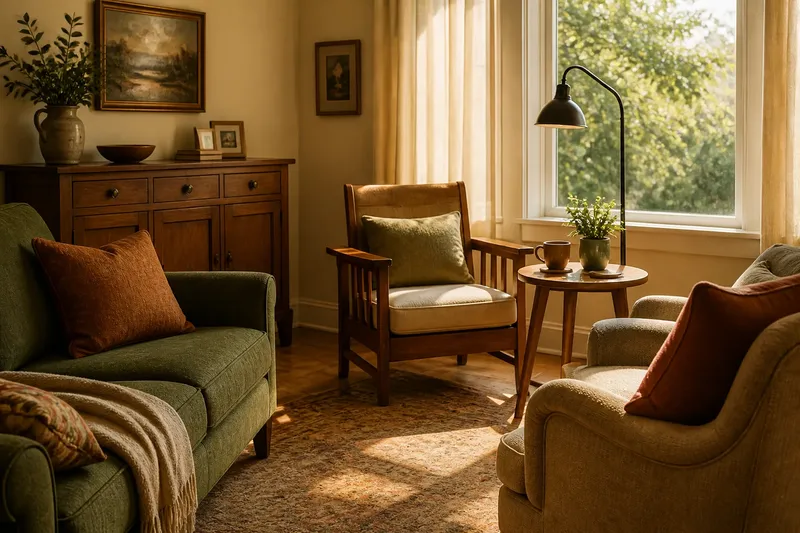
Say Mara has a hypothetical starting point of one inherited sideboard and one sofa, with no chairs or occasional table. She wants a reading place and somewhere for a guest’s cup. She first marks a clear route from the door to the window, then considers a timber-framed chair and a small table. The chair leaves the route open, so she keeps it under consideration; the first table she considers would narrow the route, so she rejects it. She then considers a smaller table that can sit within reach of the chair without obstructing the passage. The result is a reading place that serves both needs, though it does not provide extra seating for a group; that remains a separate decision rather than a reason to crowd the room.
She later finds an upholstered chair from another source. Its material differs from the timber chair, but both sit comfortably beside the table and leave the window clear. A cushion picks up a colour already present in the sofa fabric, creating a modest link. The chairs coordinate through use, position and colour, not through a matching label.
A lamp completes the reading place by making its purpose legible. Mara now has a sideboard with family meaning, a sofa for ordinary evenings, chairs for reading and company, and a table for cups. The room’s coherence comes from those relationships, not from a single purchase declaring the job done.
Use a short check before adding furniture
Before bringing in another piece, Mara checks what it will do, where it will go and what it will connect to. The possible result of each check points to a decision, rather than merely adding another item to a shopping list.
- Purpose: If the piece serves a clear activity, such as holding a cup beside a reading chair, consider it; if its job duplicates an existing table, leave it out or replace the older table.
- Position: If it fits without blocking the route between the door and window, keep considering it; if it narrows that route, try another position or choose a smaller piece.
- Connection: If its colour, shape, material, scale or use relates to something already in the room, it can belong without matching; if no link is apparent, look for a different piece or leave the space open.
- Practical fit: If the chair and table can be used together comfortably, retain the pairing; if one makes the other awkward to reach, change the position or choose a better-sized alternative.
- Duplication: If the new furniture fills a genuine gap, keep it on the list; if it repeats a task already handled, omit it or decide which existing piece it would replace.
- Need for space: If the room still feels easier to use with an empty area, leave it empty; if a specific activity is difficult without furniture there, consider one piece that addresses that need.
What do readers ask about collected rooms?
Does every sitting room need matching furniture?
No. A matching set is one way to coordinate a room, but pieces can also connect through their scale, materials, colours and uses. The useful test is whether they work together in the room.
How can old furniture sit beside new pieces?
Check their practical fit first: compare how their heights, footprints and uses relate. Then find a point of connection, such as a shared timber tone or repeated shape, while letting their differences remain visible.
When does a collected room look cluttered?
It may feel cluttered when furniture blocks movement, duplicates a task or makes ordinary activities awkward. Move or remove a piece and see whether the room becomes easier to use; empty space is a possible solution, not a decorating failure.
Is it sensible to furnish a room gradually?
Yes, if each purchase responds to a need rather than an imagined requirement to fill every gap. Keep a short note of the room’s uses and existing furniture so that each new choice has a clear context.
A room feels complete when its choices make sense
Mara keeps the inherited sideboard, chooses furniture for actual uses and lets later pieces connect without matching. Her room feels complete because its contents support everyday life while leaving room for it to continue.
That is the useful difference between matching sets and collected rooms. A set arrives with a picture of completion attached; a collection takes shape through choices made in context. Keep a note of the room’s uses and existing pieces nearby when you are considering another addition. It is a quieter guide than a catalogue, and less likely to suggest that a second sideboard is obviously necessary.