Choosing a Tablecloth for a Shared Meal
Choosing a tablecloth for a shared meal is easier when you start with its mood, read the table’s existing details and decide how much attention the cloth should draw.
Choosing a tablecloth for a shared meal starts with a question: what should the table feel like once everyone sits down? A cloth for a relaxed Sunday lunch has a different job from one for a candlelit supper, even if both meals use the same plates. Let the occasion set the tone, then work outward to the table and the cloth’s visual presence.
Decide what the meal is asking for
Before opening a cupboard or browsing fabric, name the character of the meal in ordinary terms. Is it leisurely, celebratory, informal, ceremonial, or deliberately plain? This is not an exercise in assigning a grand theme to a bowl of soup. It is a way to decide whether the tablecloth should soften the setting, add a sense of occasion, or stay quietly in the background.
Think about how people will use the table, too. A meal built around passing serving dishes benefits from a surface that feels easy to approach. A small gathering with a carefully arranged centrepiece may welcome a cloth that gives the arrangement a composed setting. A family lunch where children are drawing between courses may call for a washable fabric and a pattern that does not make every stray mark look like a new event.
Use the meal itself as the starting point, not a fixed rule about what a particular occasion requires. A birthday supper can be colourful or restrained; a weekday meal can have a cloth chosen with care. The useful distinction is whether the cloth supports the way people will gather, rather than trying to announce what sort of gathering they ought to be having.
Read the table before choosing a colour
Look at the table without any cloth on it. Notice its material, colour, shape and finish, then consider the details likely to remain visible: chair seats, crockery, glasses, serving bowls, napkins and the room around it. A tablecloth does not arrive on an empty stage. It joins a collection of things that already have their own tones and textures.
If the table has strong grain or a distinctive finish, ask whether covering it will improve the setting or simply hide a feature you like. A narrow runner or placemats might suit a meal where some of the wood should remain visible. If the surface is plain, a cloth can provide a softer ground for the dishes and give the table a more settled appearance.
Take one object that will definitely be used, such as a favourite set of plates, and compare it with the cloth options in the room’s usual light. A colour that seems calm under a shop’s bright lights may feel quite different beside warm lamps or a shaded window. There is no need to make every item agree exactly. The question is whether the cloth gives the existing pieces a setting in which they can sit comfortably.
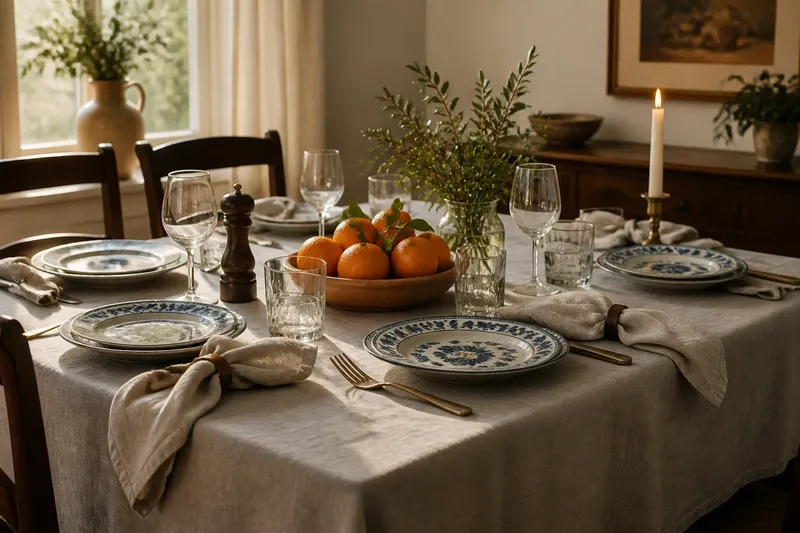
Say you are arranging an informal lunch with blue-and-white plates, a dark wooden table and a bowl of oranges for the centre. A plain warm-grey cloth could soften the contrast and let the plates and fruit remain noticeable. If the table already feels visually quiet, a muted blue cloth might instead connect the plates to the room. The useful choice depends on what you want the eye to notice first, not on a rule that plates and cloth must match.
Choose how much attention the cloth should draw
Decide whether the cloth is a background, a supporting detail or a main feature. A background cloth often has a quiet colour and little pattern, allowing the food, ceramics or flowers to lead. A supporting cloth may echo a colour already present in the room or add a small amount of texture. A feature cloth can carry more of the table’s character, especially when the crockery and centrepiece are simple.
Consider where attention should land during the meal. If the dishes are colourful or the serving bowls have decorative rims, a busy cloth may make the whole setting feel crowded. If the plates are plain and the meal is a special gathering, the cloth can provide interest without competing with them. The aim is not to remove every point of contrast. It is to choose which contrast earns its place.
Pattern affects that decision, but it does not have to dictate it. A small, low-contrast motif can behave much like texture from across the room. A bold check or large print is more likely to register as a central feature. Compare the pattern with the scale of the objects on the table: tiny details may disappear among substantial serving dishes, while a large design can dominate a narrow setting.
Fabric contributes to the mood as well. Linen and cotton often give a table a relaxed, tactile quality; a smoother cloth can look more composed. A crisp finish may suit a formal meal but feel stiff beside food served family-style. These are tendencies, not rules. The cloth should suit the way the gathering is meant to feel and the way it will be handled.
Check shape, drape and practical use
Once the look feels right, check the cloth against the table’s shape and the way people will sit. A cloth that is too short can look accidental; one that hangs heavily may catch on laps or make it awkward to reach the seats. Think about chair arms, benches and whether guests will need to move around the table while carrying plates.
Lay the cloth on the table before setting out the meal. Stand back, then sit in the seats people are most likely to use. Check whether the corners fall evenly, whether the edge interferes with a chair, and whether the surface still feels inviting rather than over-dressed. If a full cloth would obscure a table detail you want to keep, consider a runner or individual placemats instead.
Practical demands belong in the choice, not as an afterthought. For a meal with sauces, children or food that is likely to be passed around, care instructions and stain visibility matter. A forgiving print can be easier to live with than a very pale, perfectly plain surface. For a slower meal with little handling, a delicate texture may be worth the extra attention it needs.
Check the cloth’s care label and follow its instructions. Fabric composition and finishes vary, and cleaning advice should come from the maker rather than guesswork. If the meal involves candles, keep flames clear of fabric and follow sensible fire-safety practice; a decorative arrangement is not improved by making it hazardous.
How do colour, pattern and formality fit the meal?
Should the tablecloth match the plates?
Not exactly. It can pick up one colour from the plates, contrast with them, or provide a neutral ground. Choose the relationship that helps the dishes remain legible and the table feel coherent.
Can a patterned tablecloth work for a formal meal?
Yes, if its scale and contrast suit the rest of the setting. A restrained pattern can add character to simple crockery, while a strong print may call for quieter napkins and a simpler centrepiece.
Is a plain tablecloth better for a shared meal?
Plain fabric can make serving dishes easier to notice, but it is not automatically more practical or welcoming. Consider how easily the material shows marks and whether the meal’s other details need a quieter backdrop.
What if the table itself is part of the setting?
Leave some of it visible with a runner or placemats, or choose a light cloth that does not hide its character entirely. The right option depends on whether the uncovered surface helps the meal feel more at home.
Make the final choice at the table
Set out the cloth, the plates and one or two items that will be present during the meal. Look from the doorway, then from a seated position. A table can seem balanced when viewed from above and feel crowded at eye level, particularly once serving bowls and glasses are added.
Remove anything that is only there to make the arrangement look complete. If the cloth, dishes and centrepiece are all making a strong claim, take one away or choose a quieter version. If the table feels flat, add interest through one element rather than changing everything at once. This keeps the decision tied to the occasion instead of turning it into a search for perfect coordination.
Choosing a tablecloth for a shared meal is ultimately a choice about the company’s attention: what they should notice, what can recede and what should feel easy to use. Make the last check with the chairs pulled out and the serving space clear. A cloth that looks right and leaves room for people to settle in has done its work, which is more than can be said for some of the table’s decorative ambitions.